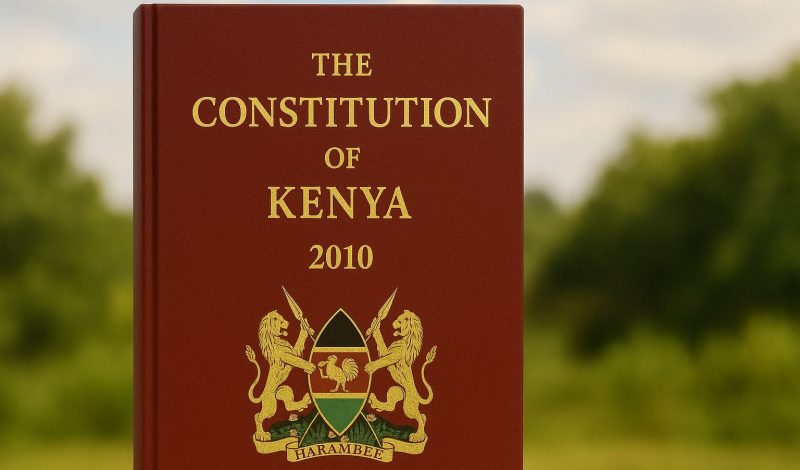

Fifteen years ago, Kenyans gave themselves a new constitution. The 2010 Katiba was not just another law; it was a promise. A promise of dignity. A promise of equity. A promise of justice.
This month, as we celebrate Katiba @15, Kenya made good on that promise at the global stage. At the UN Human Rights Council, Kenya voted yes to renewing the mandate of the Independent Expert on protection against violence and discrimination based on sexual orientation and gender identity. Only 29 countries voted in favour. Standing alone on the continent, Kenya joined South Africa as the only two African countries to vote in favour of the renewal.
By supporting the renewal of this mandate, Kenya signalled that it will not look away. That even if domestic law still lags, Kenya will stand with nations that choose engagement and accountability over denial and repression. Article 19 of the Constitution could not be clearer: “The Bill of Rights is an integral part of Kenya’s democratic state and is the framework for social, economic and cultural policies.” Article 28 adds: “Every person has inherent dignity and the right to have that dignity respected and protected.”
That’s it. Every person. Not some. Not most. Every person.
Kenya reminded the world that our Constitution is not just a local document; it is a living commitment to universal human rights. Unlike other neighbouring governments, Kenya chose human dignity; this does not mean our house is in order. Far from it. Kenyans still face discrimination, corruption, violence, and exclusion every day. LGBTQ+ Kenyans continue to live under criminalisation. Women still face systemic barriers. Minorities are sidelined. But here’s the point: the Katiba set the standard. And every time we align our policies, our votes, and our actions with that standard, we move closer to the country we promised ourselves in 2010.
We learned much from South Africa when we wrote our Constitution. Their Bill of Rights inspired ours. Their courage showed us that progressive constitutions can change societies. And by voting alongside South Africa at the UN this month, Kenya signalled that we have not abandoned that constitutional vision. At 15, the Katiba is a teenager: old enough to test its strength, but still young enough to be shaped.
Kenya’s UN vote shows the Katiba still has teeth. It can still guide us towards justice in difficult times. It can still remind us that dignity and equality are not privileges granted by politicians; they are rights guaranteed to every Kenyan.
So as we celebrate Katiba @15, for our leaders, the Katiba is a binding duty to legislate and govern in its spirit; for civil society, it is both shield and sword to hold power accountable; and for citizens, it is a daily reminder that dignity and equality are not privileges but rights and our collective obligation is to ensure the Katiba remains the guiding light toward the Kenya we promised ourselves in 2010.
The Constitution was never about selective rights. It was about all of us. And the best way to honour it is to live it in choices, laws, and votes that affirm the simple truth written into our Bill of Rights:
“Every person has inherent dignity. Every person deserves equal protection. Every person means every person.”
Sarah Nyakio is a communications consultant at The Legal Caravan.

